

The second-hand market, also known as the resale or pre-owned market, is rapidly expanding worldwide, often surpassing traditional retail.
The second-hand products market, valued at $186 billion in 2024, is projected to reach a staggering $1.04 trillion by 2035, growing at an annual rate of 17.2%. This remarkable growth can be attributed to a combination of factors, including favorable economic conditions, increased environmental awareness, and the widespread adoption of resale platforms.
From cars and heavy machinery to mechanical and electronic equipment, luxury goods, and even the fashion and apparel industry, businesses are now thriving on the resale market. Shops are selling refurbished electronics, and there are even online platforms dedicated to reselling pre-owned clothing.
How does that affect brands and dealerships? Is the second-hand market a direct competitor to these brands, or should they view it as an opportunity?
Market studies have revealed that brands, dealers, and platforms embracing the resale market are experiencing significant growth across various metrics, particularly in terms of market size expansion and brand influence. The key to their success lies in their ability to seize this rapidly growing market.
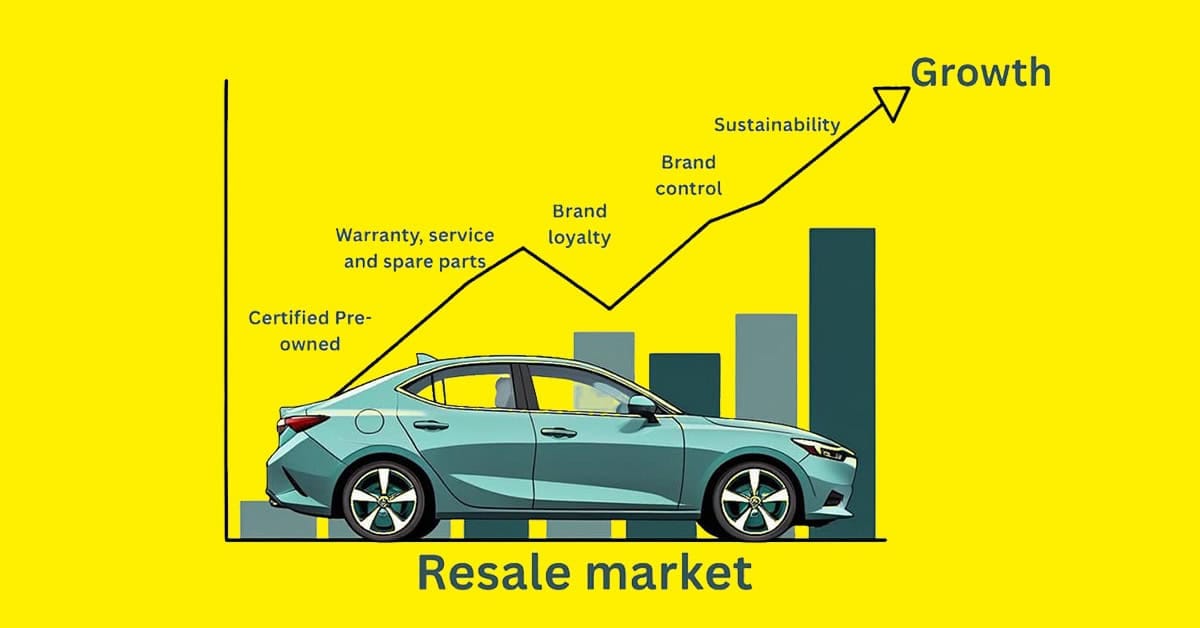
- Certified pre-owned programs: Many manufacturers have official programs that offer rthoroughly inspected, refurbished used products with warranties and additional benefits, such as cars, generators, heavy machinery, and luxury watches.
- Extended warranty programs: Manufacturers, Original Equipment Manufacturers (OEMs), and official dealers are using their brand image to sell extended warranty options. They capitalize on the demand from resale customers seeking guaranteed quality at a more affordable price.
- After-sales service and spare parts: As products age, the need for maintenance and spare parts increases, making it a lucrative area for companies to profit from.
- Strategic growth through brand loyalty:. Customer acquisition costs significantly more than customer retention, from 5 to 7 times higher. As highlighted by Harvard Business Review, increasing customer retention by a modest 5% can boost profits by 25 to 95%. So why not capitalize on the acquired customers looking for a specific brand, but at a lower price? Brands can implement programs that offer trade-ins or credits to to keep customers within the brand ecosystem.
- Brand control: By embracing the resale market, brands gain direct control over their image and how their brands are resold and perceived.
- Getting onboard sustainability: Sustainability is becoming increasingly important to consumers, particularly Millennials and Gen Z. These generations prioritize eco-conscious choices and are willing to pay a premium for sustainable products. Therefore, businesses must meet this demand to attract and retain customers.
Embracing the resale market is a smart, future-focused strategy for brands looking to grow in today’s sustainability-driven economy. As consumers increasingly prioritize eco-conscious shopping, participating in the second-hand market helps brands tap into new audiences, boost customer loyalty, extend the value of their products and seize new growth opportunities.
Does your industry have a resale market? If so, get in touch with us to explore new opportunities to help your business grow.